My Story
My story started with curiosity.
Coffee has followed me from college classrooms to coffee farms in Central America, through years of learning, brewing, and searching for exceptional coffees.
Eventually, that curiosity turned into a problem I wanted to solve.
I'm Preston. This is how Wild Lot came about.
“
Coffee became the journey.
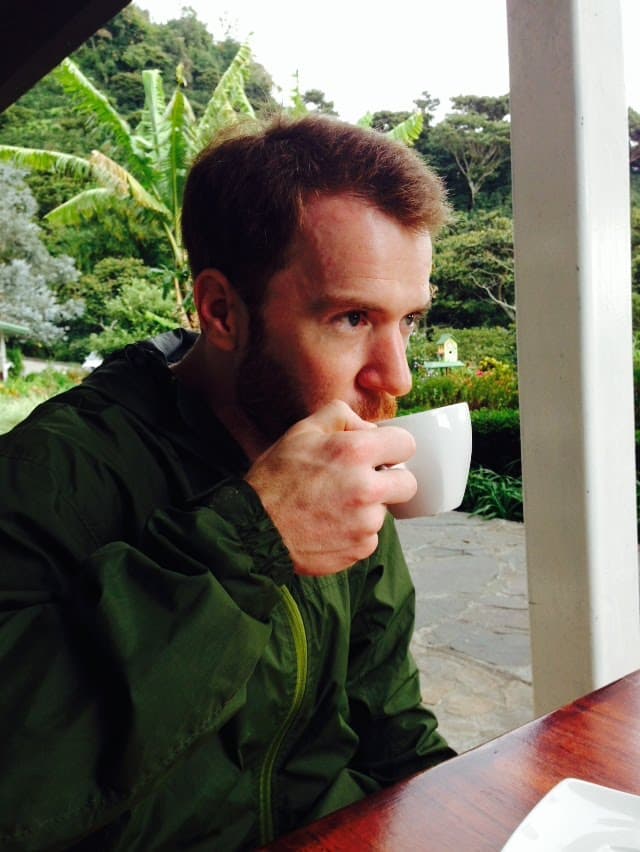
Gesha coffee in Boquete, Panama · My honeymoon, circa 2015
It started as an excuse.
My relationship with coffee started for a pretty simple reason: it was an excuse to get out of class.
In college, I spent a summer in Costa Rica studying Spanish in an intensive immersion program. The school was surprisingly strict about breaks. There weren't many acceptable reasons to interrupt class.
Leaving class to get another coffee, however, was a perfectly acceptable break.
I wasn't a coffee drinker when I arrived. I was, however, curious, restless, and always looking for an excuse to explore.
So I quickly became one.
Coffee stuck.
Coffee became part of the journey.
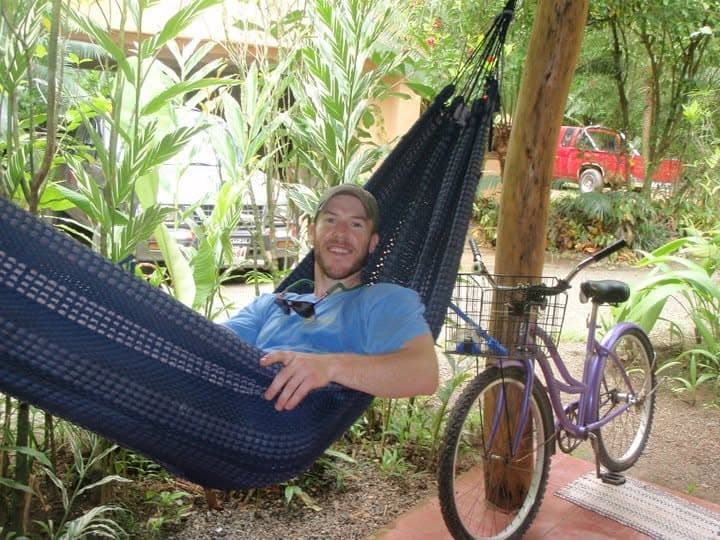
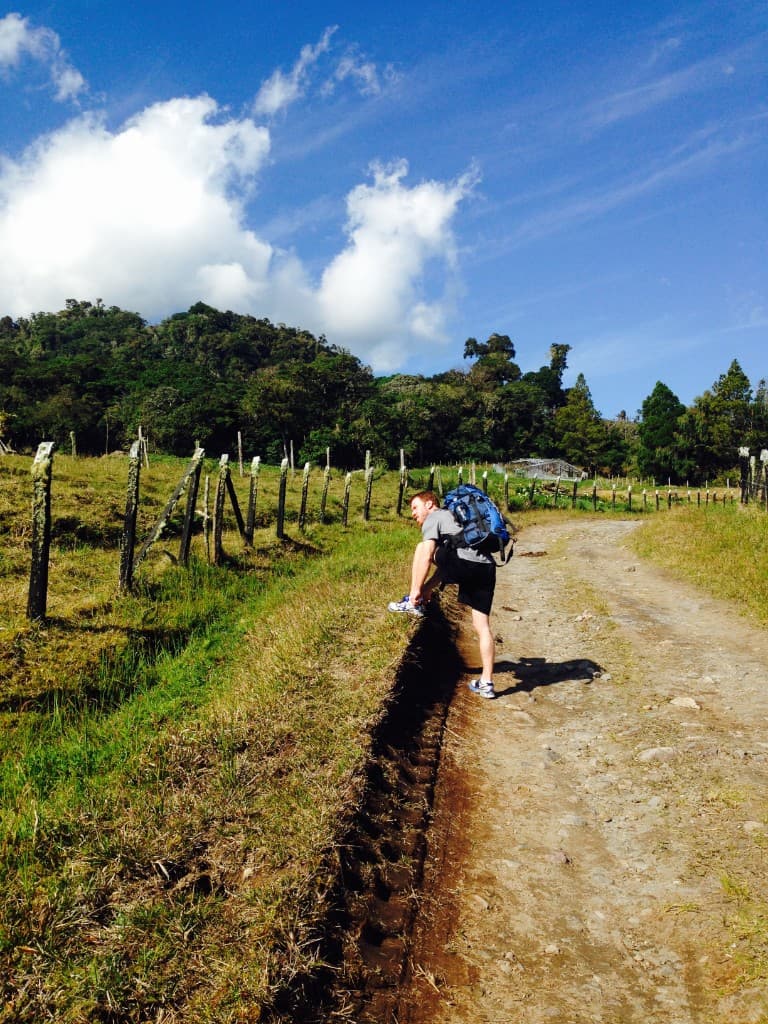
A few years later, I backpacked through Central America, stopping at coffee farms along the way. I started to understand that the thing in my cup began as something agricultural—a particular plant, grown by particular people, in a particular place.
Years later, I somehow convinced my wife that Panama's coffee country belonged on our honeymoon itinerary.
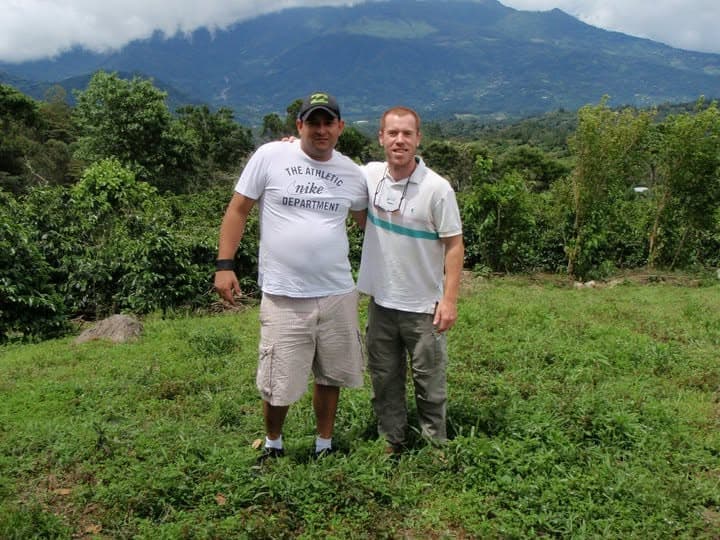
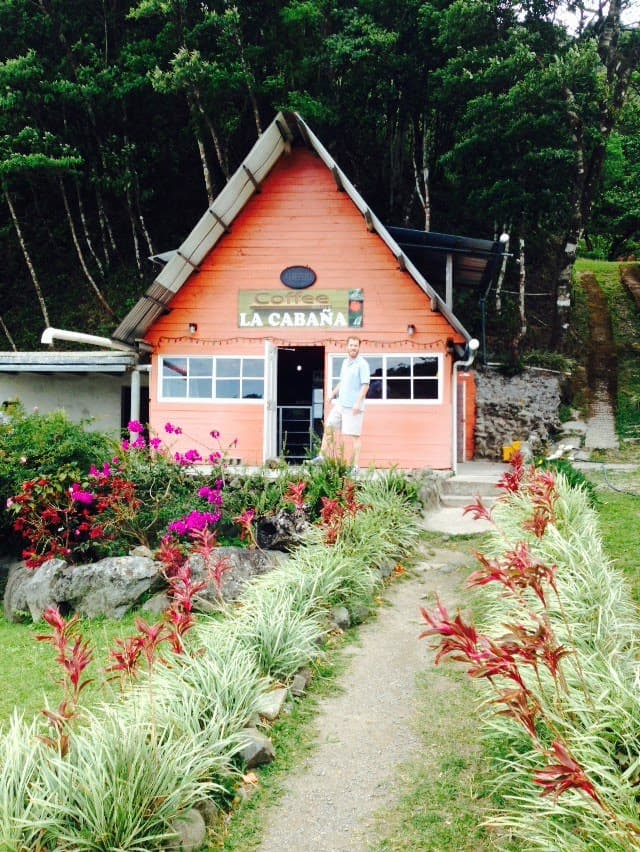
We traveled through Boquete, visited coffee farms, drank coffee at origin, and hiked mountain trails through coffee country. I had opportunities to walk among Panama's famous Gesha coffees and spend time with the people producing them.
Long before I knew enough to obsess over varieties, processing methods, extraction, or water chemistry, I was fascinated by the connection between coffee and place.
“
The more I traveled, the more I realized coffee isn't just a drink — it's people, places, and a story in every cup.
Curiosity became obsession.
After living in Austin for about a decade, my relationship with coffee changed again.
Great local coffee shops, talented roasters, and—probably most importantly—friends who knew way more about coffee than I did introduced me to the enormous world hiding behind the word coffee.
Origin • Variety • Processing
Fermentation • Drying • Roast
Grinders • Water • Extraction
Coffee stopped being just coffee.
I learned that two coffees from the same country could taste almost nothing alike. Eventually, I learned that two coffees from the same farm could taste remarkably different.
A bag could represent a particular producer, a particular farm, sometimes even a tiny separation of one harvest. Change the variety, fermentation, drying method, roast profile, water, or brewing technique and you could end up with something completely different.
Like a lot of people who fall into specialty coffee, the more I learned, the more particular I became.
“
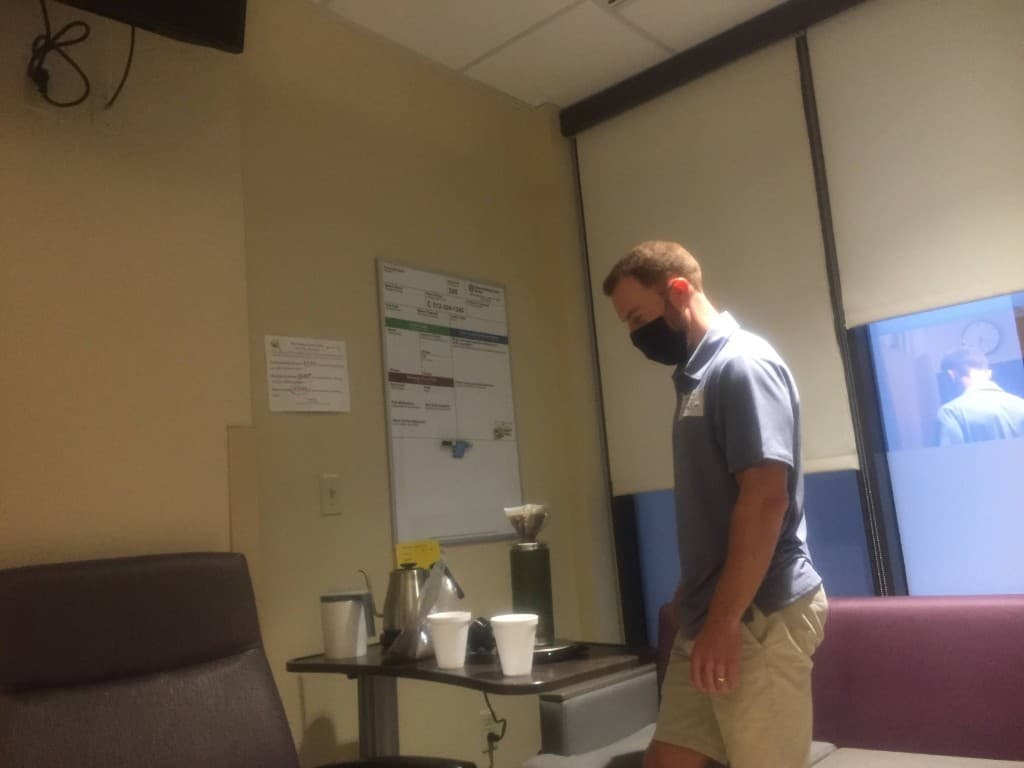
By the time one of our kids was being born during COVID, apparently it seemed perfectly reasonable to me to bring a pourover setup to the hospital and make coffee for the nurses.
Then there was Onyx.
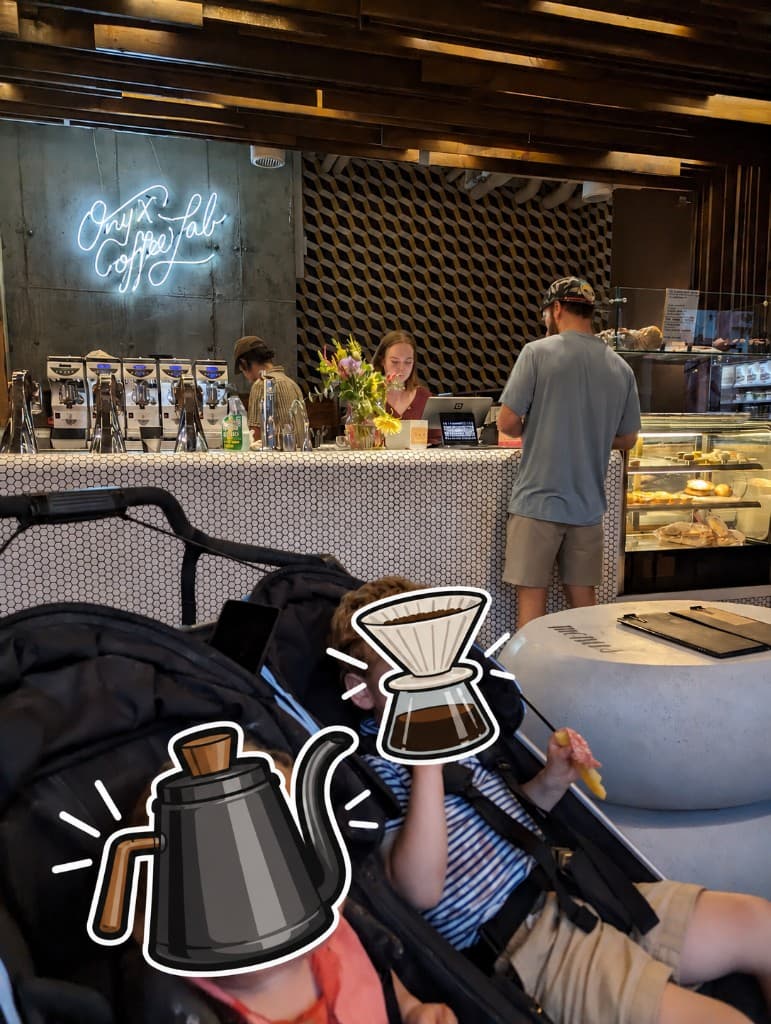
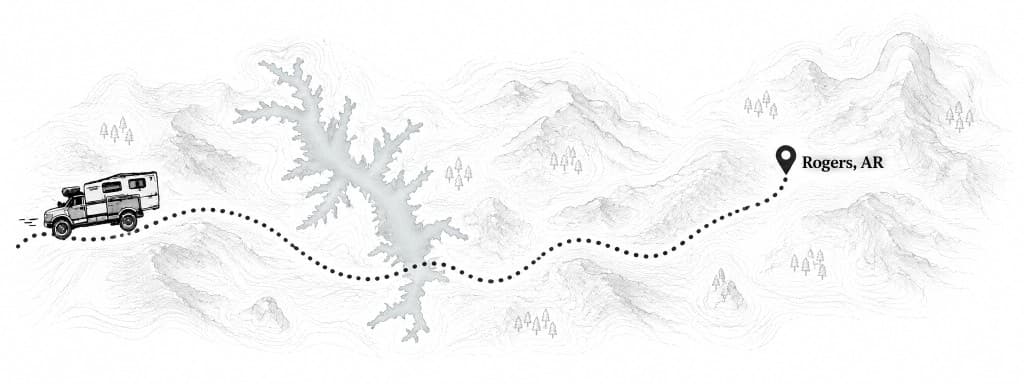
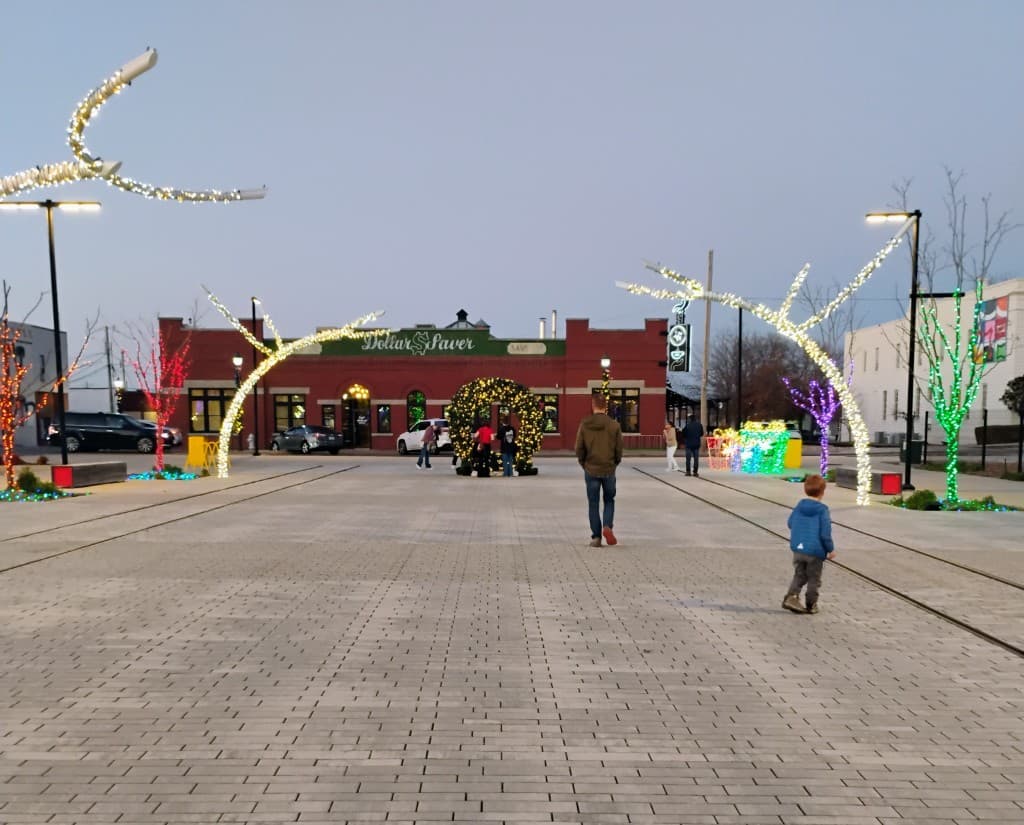
Years ago, my wife and I were traveling with our kids in our overlanding truck camper. After enough time with a family packed into a very small space, we detoured through northwest Arkansas looking for a break.
We ended up at Onyx Coffee Lab.
That visit reset my expectations for what specialty coffee could be.
I loved the coffee, obviously. But I also loved the attention to everything surrounding it—the sourcing, transparency, roasting, brewing guidance, and willingness to tell you an almost absurd amount about what was in the bag.
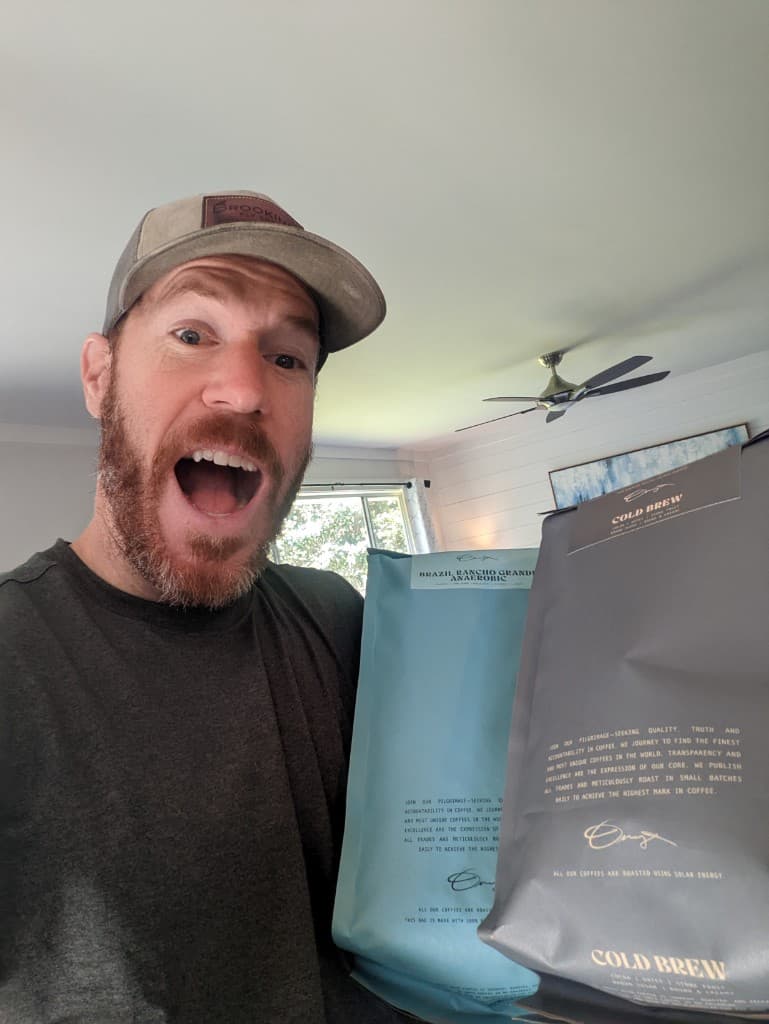
I started ordering Onyx almost exclusively. That continued for the next three or four years.
“
That visit reset my expectations for what specialty coffee could be.
Eventually, though, I wanted to explore.
And that's where things got frustrating.
The same coffee isn't necessarily the same coffee.
“
Saving 15% didn't feel like a bargain if I enjoyed the coffee 30% less.
I started ordering from other roasters.
Sometimes I'd find a coffee I loved from Onyx, trace it back to the producer or farm, and discover another specialty roaster selling coffee from that exact source.
Everything looked right.
Great producer. Great green coffee. Traceable sourcing. Beautiful website. Specialty-coffee prices.
Then I'd brew it.
And too often, I was disappointed.
That experience changed the way I buy coffee.
The producer matters. The farm matters. The green coffee matters enormously. The roaster DEFINITELY matters.
Exceptional coffee requires an entire system around that green coffee: sourcing, selection, sorting, roasting, quality control, cupping, storage, resting, brewing—and obsessive attention to details most customers will never see.
Eventually, I stopped looking for slightly cheaper versions of coffees I already loved and started identifying the relatively small group of roasters whose coffees I could buy with confidence.
Solving the quality problem
created a shopping problem.
Once I had a shortlist of roasters I trusted, one problem largely disappeared: I could reliably buy excellent coffee.
Unfortunately, buying it became a pain.
Exceptional specialty coffee is incredibly dynamic. Roasters constantly cycle through harvests, producers, varieties, and tiny lots.
I'd discover an Ethiopian coffee that sounded incredible, order it, wait for roasting and shipping, let it rest, finally dial it in and realize:
This is incredible.
So I'd go back for another bag.
Sold out.
Now the research started all over again.
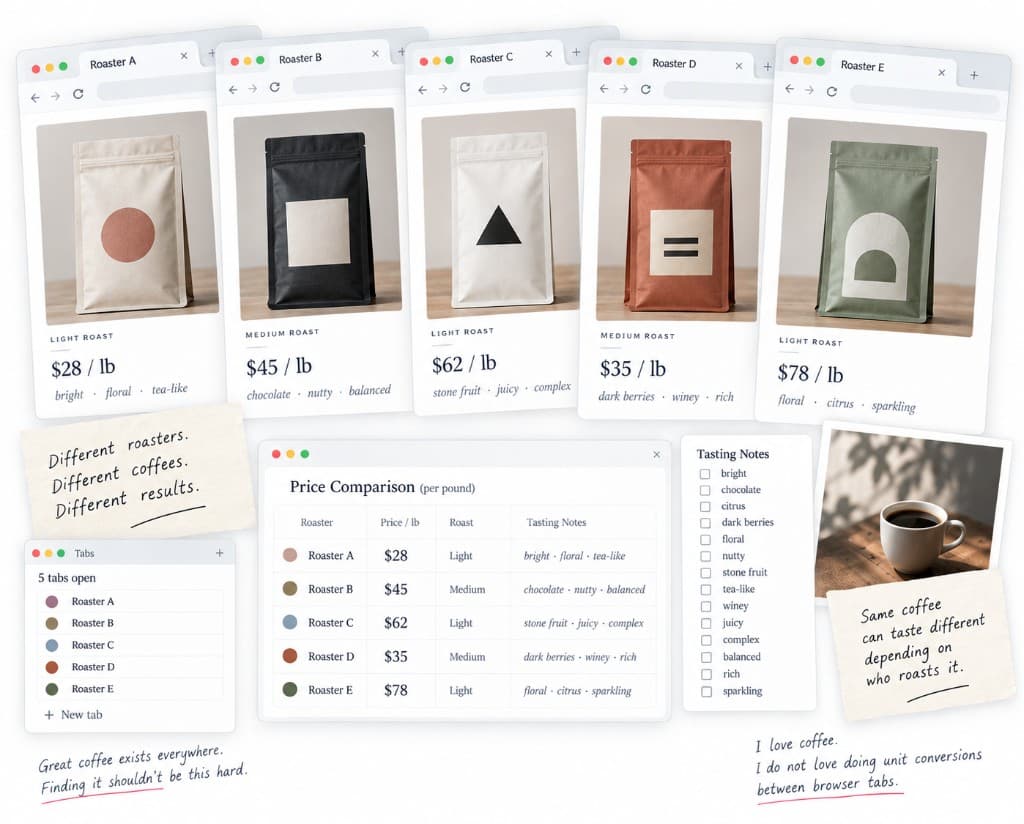
I love coffee.
I do not love doing unit conversions between browser tabs.
So I built something.
I'm a software developer.
There is a certain point at which repeatedly doing something annoying stops feeling easier than writing software to eliminate it.
I apparently reached that point with coffee.
I built myself a dashboard.
It collected the coffees from the roasters I already trusted and put them in one place.
I could see what was available, compare prices regardless of bag size, and organize coffees by origin, producer, variety, processing, roast, and flavor.
I didn't build a coffee website.
I built something for myself to figure out what coffee I should order next.
And then I kept using it.
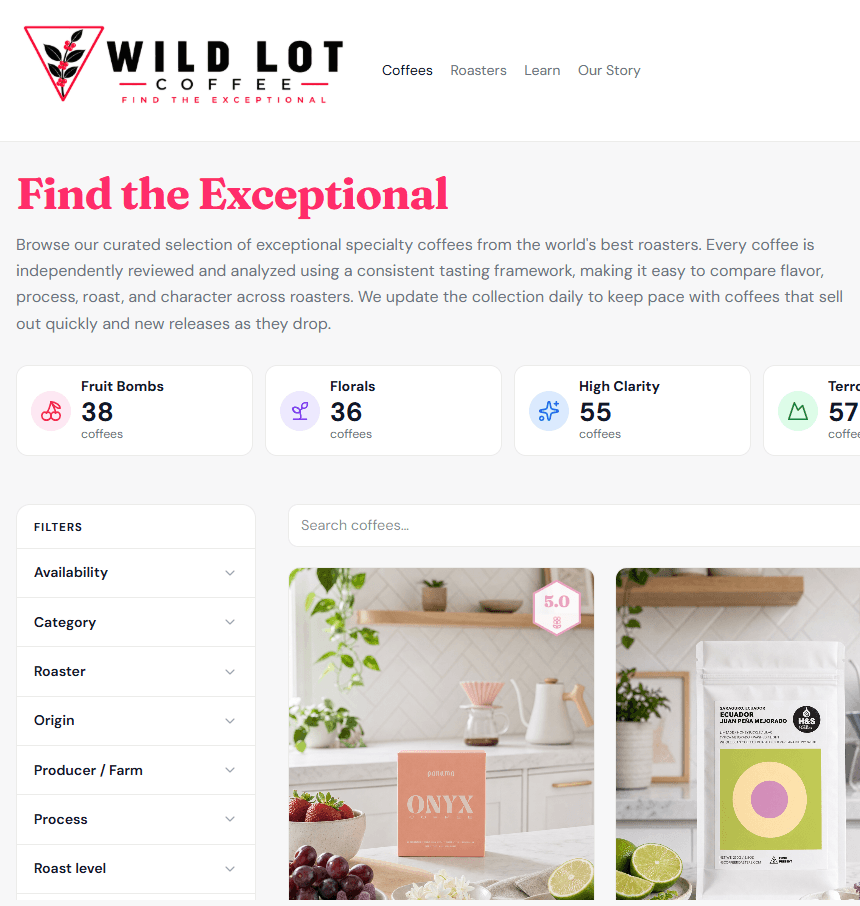
Eventually, my personal dashboard became Wild Lot Coffee.
Wild Lot is built around a simple idea:
There is an extraordinary amount of information about specialty coffee, but surprisingly few good ways to make sense of it.
Wild Lot follows a deliberately curated group of exceptional roasters and brings their coffees together in one place.
We organize origin, producer, variety, processing, roast, flavor, price, and availability—and normalize information that different roasters describe in different ways so coffees can be more reliably compared.
What does it taste like?
Flavor / sensory profile
Where did it come from?
Origin / producer
How was it processed?
Process / variety
How light is the roast?
Roast profile
What does it actually cost?
Normalized $/lb
Is it available?
Current availability
Is this a coffee I'm likely to love?
Wild Lot isn't here to tell you which coffee is "better."
A coffee with higher acidity isn't inherently better than one with lower acidity. A wildly processed fruit bomb isn't inherently better—or worse—than a delicate washed Gesha.
They're different coffees for different people.
We want to help you understand those differences.
Built for people who care a little too much about coffee.
Wild Lot still solves the same problem it solved when it was just my personal dashboard.
I still use it to buy my own coffee.
I'm still learning. Still brewing. Still getting excited about a ridiculous coffee—and occasionally discovering it's sold out when I try to buy more.
Wild Lot isn't trying to catalog every coffee from every roaster. It's about curation. We focus on roasters with exceptional reputations for sourcing, roasting, and quality control.
That means Wild Lot won't show you every coffee you could buy.
I'd rather help you find an exceptional one.
The goal is simple:
- Understand what's in the bag.
- Discover coffees that fit what you love.
- Spend more time drinking exceptional coffee than searching for it.
I built Wild Lot because that's what I wanted.
Hopefully it helps you find your next great bag, too.
Find the exceptional.
— Preston
Founder, Wild Lot Coffee